
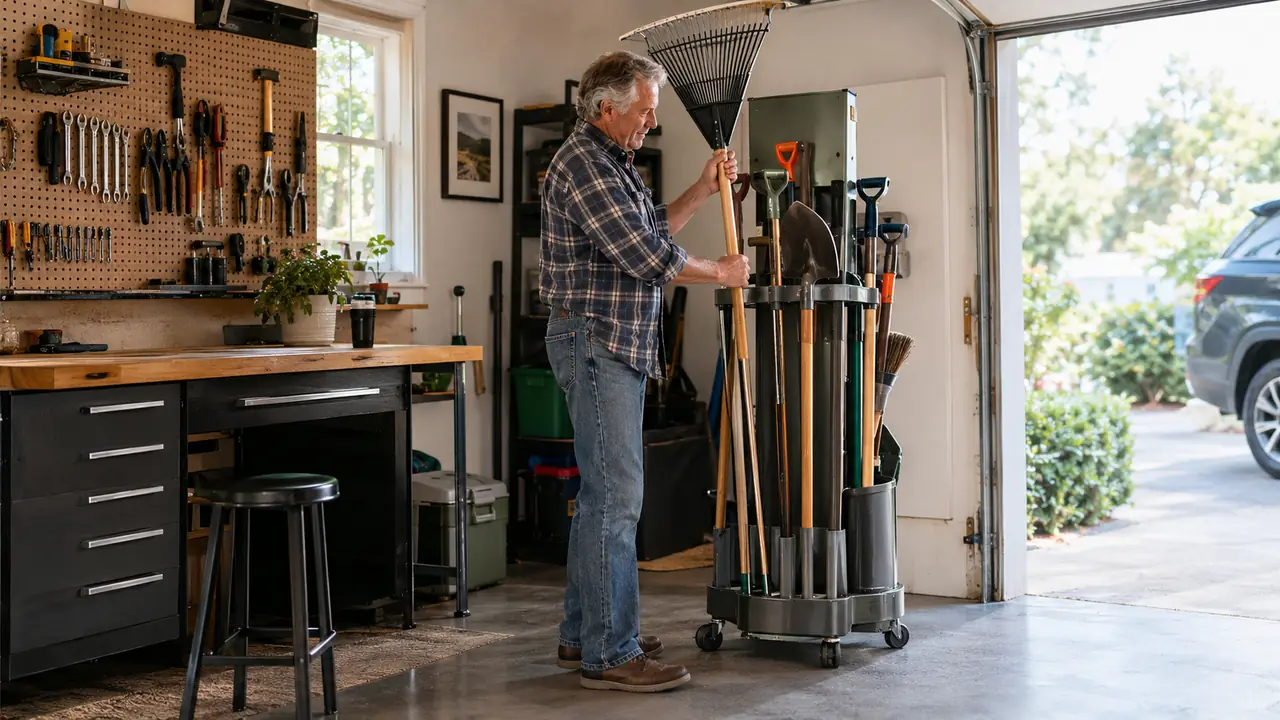
The rake handle that put me in a wrist brace is the reason this review exists. I caught a toe on a tine backing out of my shed last April, went down hard, and my left wrist took the worst of it. The doctor called it a sprain. The brace came off after about three weeks, but the message stuck: every long-handled tool in that shed was a hazard sitting on the floor. Carol said the shed looked like a junk drawer with a roof, and she wasn't wrong. I spent thirty years in building maintenance, so I know a thing or two about keeping tools where they belong.
I looked at wall hooks first. Then ceiling racks. Then I found the DAOUTIME rolling tool tower, a freestanding organizer on wheels that promised to hold rakes, shovels, and hoes upright without a single screw in my studs. I've now used it through a full Nebraska growing season, from spring planting to fall cleanup. This is the honest version of what I found, including the parts the product photos don't show you and the mistakes I made setting it up. I'll tell you right now that I like the tower. I'll also tell you the three things that made me almost send it back.
The Quick Verdict
A well-built rolling organizer that does exactly what it promises. It cleared my shed floor in an afternoon and still rolls smooth after six months. Not perfect: assembly takes about an hour, it drifts on a sloped floor, and it's top-heavy if you load it carelessly. 8.6 out of 10.
Amazon Check Today's Price →Tired of tripping over rake handles?
The DAOUTIME rolling tool tower holds a full set of long-handled tools upright, on wheels, with no drilling. I've used mine every week for six months. It's the storage fix I wish I'd made years ago. Check today's price on Amazon and see if it fits your garage or shed.
Amazon Check Today's Price on Amazon →How I've Used It
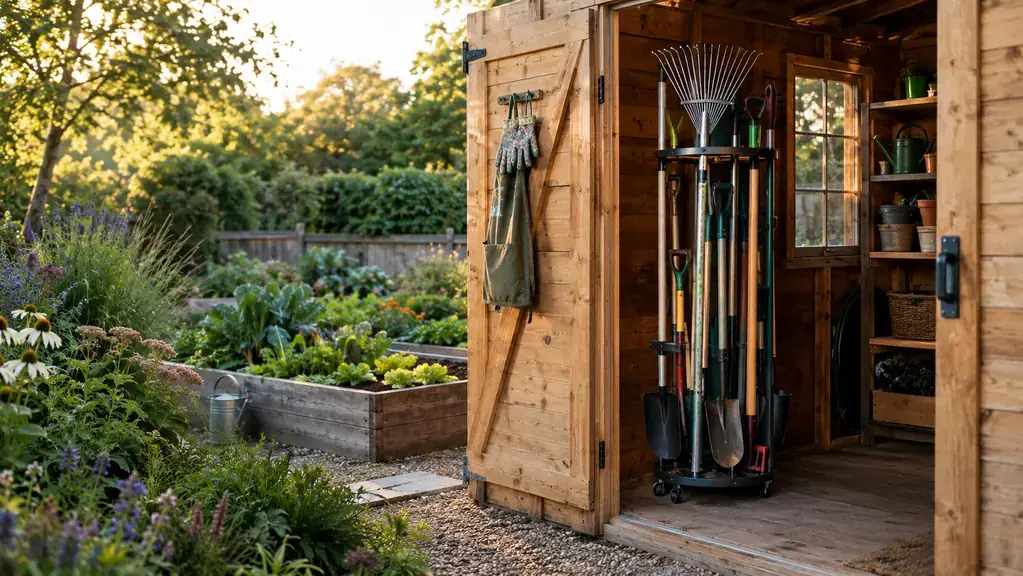
My setup is simple. I park one car in the two-car garage, and the other bay is my workshop side. The 8x10 wood shed out back holds the mower and the bulk of my garden tools. The DAOUTIME tower lives in the shed most of the year, right inside the door. The mower stays on one side, the tower on the other, and there's still room to walk through. That turned out to be the right call, because it's the tools I reach for every week that used to end up on the floor.
Right now mine holds nine tools. Two rakes, a square shovel, a spade, a hoe, a cultivator, a leaf scoop, a broom, and a pitchfork. The long handles go through the holders at the top, and the business ends sit in the base. It took me a couple of tries to figure out which tool goes where, because the handles all hang at slightly different angles. Once I sorted that out, the tower stopped being a project and started being part of the shed.
I use the wheels more than I expected. When I'm working the raised beds, I roll the whole tower to the shed door and grab what I need. When Carol works the perennial border, she rolls it to the other side. It rolls best on the concrete apron and the shed's plywood floor. On gravel it's a drag, literally, but I didn't buy it for gravel.
What Nobody Tells You About Assembly
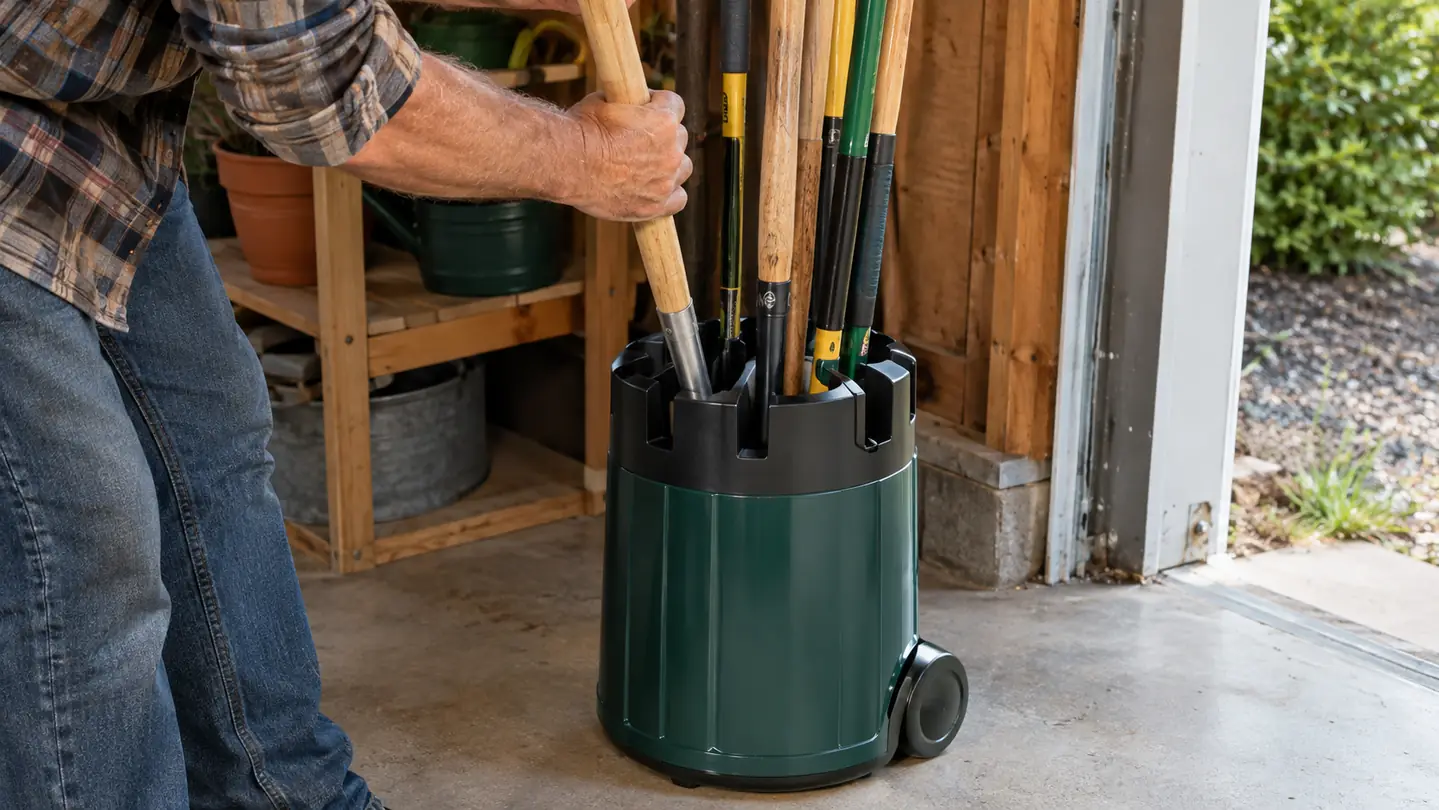
The box says assembly is simple, and it is. It also took me about an hour, which is longer than I expected. Nothing about the process was hard. There were just more pieces than the picture on the box suggests, and the instructions are mostly drawings. The drawings are clear enough, but a couple of them assume you can tell which screw is which from the picture alone.
My one genuine complaint is the wheels. They attach with small hardware that's easy to over-tighten, and if you snug them down too hard, the tower doesn't roll as freely. I learned that the hard way, backed the hardware off a quarter turn, and it rolled fine. The fix took thirty seconds. Knowing it up front would have saved me a few choice words.
The other thing I'd tell you is to lay everything out before you start. I didn't, and I spent ten minutes hunting for a nut that had rolled under the workbench. If you're the kind of person who reads instructions twice, this will be a twenty-minute job. If you're like me and dive in, budget an hour and keep a magnetic tray handy.
One more note on assembly: the whole thing came out of the box with no damage, which I appreciate, because shipping dings are common with this kind of gear. The pieces fit together cleanly, no forced alignment, no stripped holes. That tells me the molds are decent and the quality control is doing its job. I've assembled enough cheap shelving to know the difference.
How It Handles a Full Season
I've had mine since early May, so it's been through the heaviest use a garden tool organizer can see. Spring planting meant the shovel and trowel came out daily. Summer meant the hoe and the cultivator. Fall cleanup meant the rake and the leaf scoop. The tower never wobbled, never tipped, and never dropped a tool. I kept a mental note of any wobble or loose joint, because that's the first thing that shows up on cheap storage.
The plastic is thicker than I expected. I was ready to be disappointed, because a lot of storage gear at this price point flexes and cracks. This one doesn't. It's not metal, and I'm not going to pretend it is, but it has held up to a season of daily grabs and the occasional bump from the mower without a crack or a stress mark.
The one thing I'd warn you about is the floor. My garage floor has a slight slope toward the door, and the tower rolls. That means it slowly drifts a few inches over a week or two. On a perfectly flat floor it stays where you put it. On a slope, you'll nudge it back now and then. It's a minor thing, but it's exactly the kind of detail the product photos don't mention.
I should also mention the weather. The shed isn't heated, and Nebraska swings from humid summers to below-zero winters. The tower has sat through both without warping, rusting, or getting brittle. The wheels still turn freely. I can't promise it'll last a decade, because I'm only six months in, but nothing about the way it's aging worries me.
The Tradeoffs I Live With
Let me be straight about the things that aren't perfect. First, the footprint. The tower takes up less floor space than a stack of tools leaning in the corner, but it's not invisible. It needs a spot where it can sit without blocking the path, and the tools stick up from it, so it reads as a presence in the room. That's worth repeating, because the product photos make it look like it disappears into the corner. In my shed it lives beside the door, out of the way but reachable.
Second, it's top-heavy if you load it carelessly. The long handles stick up three or four feet, and if you put the heaviest tools in the outer slots, the whole thing wants to tip when you push it. The fix is simple: load the heavy stuff in the middle and the light stuff on the edges. Once I did that, I stopped thinking about it. But if you're the kind of person who just shoves tools in, you'll find out the hard way.
Third, not every handle shape fits the holders equally well. Round handles and D-grip handles seat fine. A shovel with a bent handle or a hoe with an extra-long neck needs a little wiggling. I've got one old rake with a cracked handle that doesn't seat at all, so it hangs from a wall hook instead. That's not a knock on the tower. It's just reality: no organizer fits every tool ever made.
The last tradeoff is the one I almost didn't buy it for: it doesn't hold everything. If you've got a snow shovel, a sledgehammer, and a post hole digger in the mix, check the layout before you commit. The tower is built around the standard rake and shovel family. Tools with big heads or odd shapes may need to live elsewhere, and that's fine as long as you know it going in.
What I Got Wrong First
I mentioned I made mistakes setting it up, and I'll own them. The first was over-tightening the wheel hardware, which I already covered. The second was loading the tower the wrong way. I put the two heaviest tools, the square shovel and the pitchfork, on the outside edges. The first time I rolled it across the garage, it wanted to tip. I caught it before it hit the floor.
The third mistake was expecting it to be a catch-all. I tried to hang a pruning saw and a pair of loppers on it, and they just didn't fit the way the long-handled tools do. They live on a pegboard now. The tower is for long-handled tools. Once I stopped trying to make it hold everything, it worked exactly the way it should. I mention it because the tower gets blamed for a lot of things that are really about matching the tool to the holder.
The lesson, and it's a fair one: read how the tool holders are laid out before you load it. Match your tool lineup to the slots, heaviest in the middle, and this thing is rock solid. Ignore that and you'll blame the tower for your own loading job.
One more thing I got wrong: I expected it to be instantly perfect, and it wasn't. The first week I kept second-guessing the purchase. Then I stopped fiddling with it, loaded it the way it wanted to be loaded, and it disappeared into the background. That's the real test of storage gear. You stop noticing it because it's doing its job.
I've got nine long-handled tools in mine and it still rolls across the garage floor without a wobble. That's the whole job, done.
Alternatives I Considered
Before I bought the DAOUTIME, I nearly went with wall hooks. They're cheap, they work, and they get tools off the floor. But they mean drilling into the shed wall, and my shed is an 8x10 wood structure, not built for hanging heavy tools on every wall. I didn't want to hunt for studs in the garage drywall either, and I didn't want a permanent rack I couldn't move. I also priced out a full wall system once, and the hardware alone was more than I wanted to spend on a shed that's already doing its job.
I also looked at ceiling racks. They're great for ladders and seasonal stuff, but they mean lifting a shovel over my head to put it away. At 61, with one wrist that's already been through the wringer, I wanted something at waist height. That ruled out ceiling storage pretty fast.
I compared it to a Rubbermaid version at the big box store. The Rubbermaid was built fine, but the DAOUTIME had the same basic layout, and the price difference was enough to make my decision easy. I also looked at simple bucket-style holders, but they only take a handful of tools and they don't roll. The rolling tower was the only option that checked every box.
In the end, the decision came down to what the tower does that none of the others did: it holds the tools upright, on wheels, with no wall damage, and it lets me move the whole collection to wherever I'm working. Wall hooks hold tools. Ceiling racks hold tools. Only the rolling tower follows me from the shed to the raised beds and back.
What I Liked
- Cleared every long-handled tool off my shed floor in one afternoon
- Rolls easily between the garage and the shed on flat surfaces
- Holds nine tools in my setup and could take more
- No drilling, no wall anchors, no stud hunting
- Thick plastic that has held up to a full season of daily use
Where It Falls Short
- Assembly took me about an hour, longer than the box suggests
- Doesn't lock in place, so it drifts on sloped floors
- Top-heavy if you load heavy tools in the outer slots
- Wheels are great on concrete, useless on gravel and grass
- Some handle shapes, like bent or cracked ones, don't seat well
Who This Is For
Buy this if you have a pile of rakes, shovels, and hoes living on the floor of your garage or shed, and you're tired of stepping over them. It's especially good if you rent, because it needs no holes in the walls, or if you just don't want to commit to drilling a permanent rack into your shed.
It's also for people who move their tools around. If you work the front beds one day and the back beds the next, the wheels earn their keep. And if you're older, like me, the waist-height design beats bending down and reaching into a corner every single time. My wrist and my back both thank me. It's the kind of purchase that doesn't feel exciting, but it makes every trip to the shed easier.
There's also something to be said for the habit it creates. When every tool has a home, putting things away takes ten seconds instead of a decision. The tower makes it obvious where the rake goes back to. That sounds small, but it's the difference between a shed that stays tidy and a shed that drifts back into a mess.
Who Should Skip It
Skip it if you only own two or three long-handled tools. A couple of wall hooks will do the same job for less money and zero floor space. Skip it if your storage area has a gravel or dirt floor, because the wheels won't roll and you'd be paying for a feature you can't use. That's not a criticism. It's just a mismatch between what the product is and what you need.
And skip it if you want something that locks in place or that you can mount to a wall. This is a freestanding roller. It does that one job well. If your floor slopes, you'll be nudging it back into position now and then, and if that sounds annoying, a wall rack is the better answer for you. No hard feelings.
Also think about how much floor you're willing to give up. The tower needs a clear circle of floor about the size of a bucket's footprint, plus room to grab tools around it. If your garage is packed wall to wall, a wall rack that uses zero floor might serve you better, even if it means drilling a few holes.
The honest bottom line: it works
Six months in, the DAOUTIME rolling tool tower is still doing the job I bought it for. Every long-handled tool in my shed is off the floor, and I haven't tripped once since. That's the best thing I can say about any piece of organization gear. Check today's price on Amazon and see if it fits your space.
Amazon Check Today's Price on Amazon →