
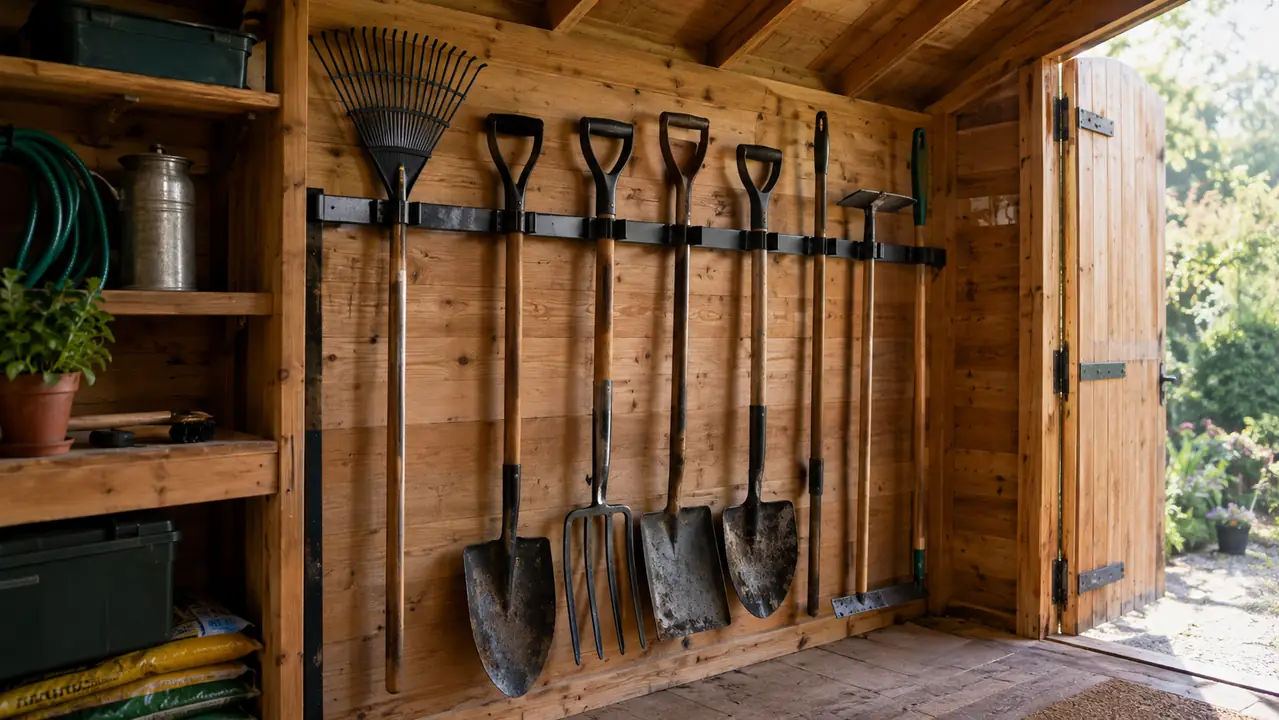
I tripped over a rake handle in my shed last spring and sprained my wrist on the way down. That was the day I stopped telling myself I'd get around to organizing the tools. I'm Walt, I'm 61, and I keep a one-car garage bay and an 8x10 wood shed behind my house outside Omaha. Both of them had become a game of pickup sticks every time I reached for something. I looked at wall racks for weeks before I settled on the TVKB 68-inch all-metal garden tool organizer, and after six months of daily use, I can tell you exactly what it does and what it doesn't.
The Quick Verdict
The TVKB wall rack is the best tool storage fix I've found for the money. It cleared my shed floor in an afternoon, holds everything from rakes to loppers, and six months in, nothing has loosened, sagged, or dropped a tool.
Amazon Check Today's Price →Get Your Tools Off the Floor This Weekend
The TVKB 68-inch all-metal wall rack mounts in about 20 minutes and holds up to a dozen long-handled tools. Check today's price on Amazon and see if it fits your wall.
Amazon Check Today's Price on Amazon →How I've Used It
I mounted mine in the shed on a Saturday morning in early May, right after the last frost. The shed wall is plywood over studs, and the rack comes with the hardware you need for that. I found the studs with a cheap magnetic finder, marked six holes, and had it up in about 20 minutes. My one tip: get the top screws in first and use a level before you tighten anything. I didn't on the first try, and the rack sat slightly crooked for a week before I fixed it. The crookedness was my fault, not the rack's. I had marked the holes by eye and trusted that the wall was level, and the wall wasn't. Once I put a level on it, I saw the left side sat about half an inch lower than the right. I loosened the top screws, shifted the rack, and re-tightened. Ten minutes of work and it was straight.
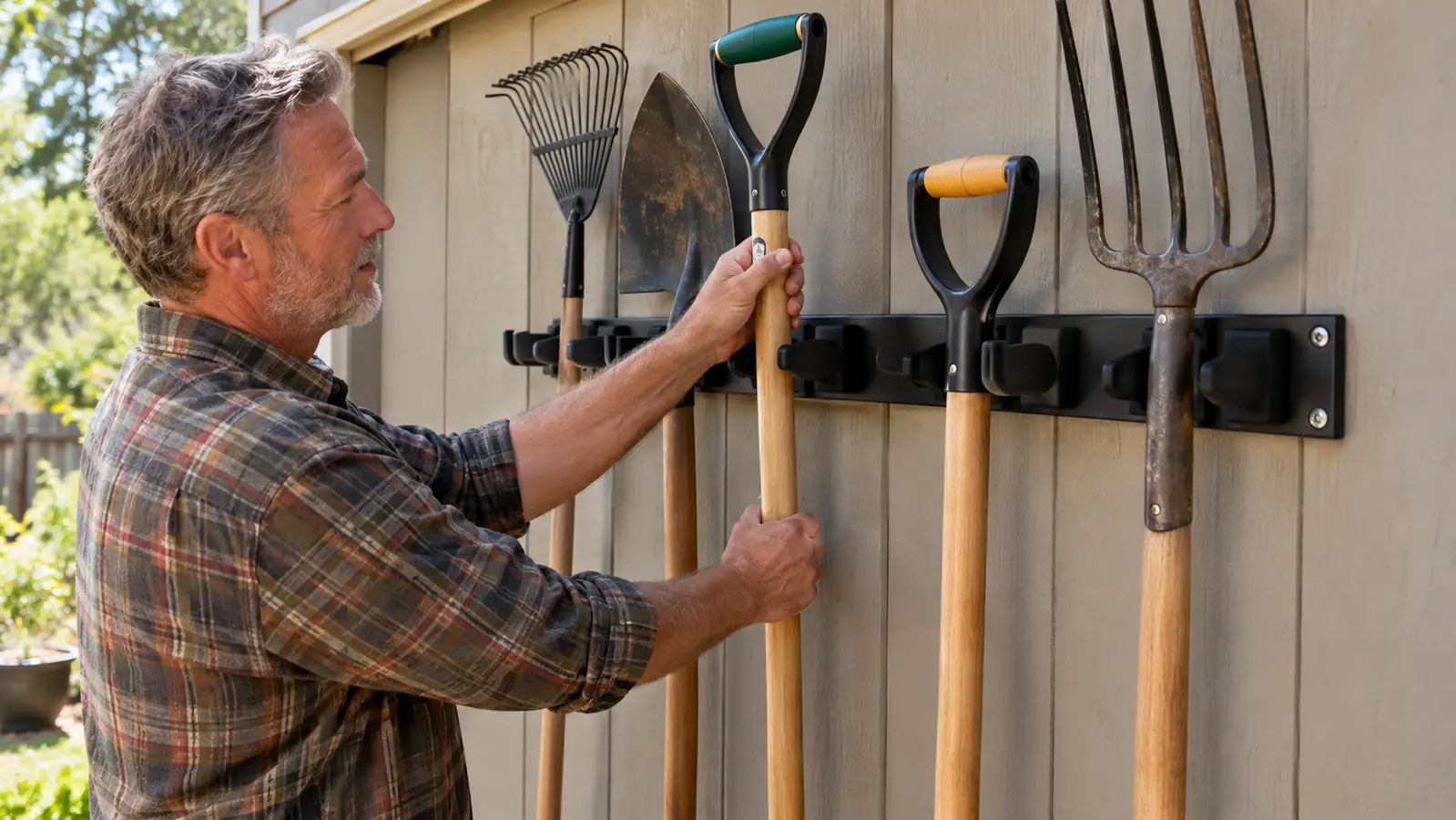
Since then, the rack has held my daily rotation: two rakes, a square-point shovel, a spade, a hoe, a pitchfork, loppers, and a couple of pruners that hang from the smaller hooks. In six months I've never had a tool fall. The rubber grips on the holders are what make that happen. They're not a gimmick. A metal-on-metal hook will let a fiberglass handle slide after a season of humidity. The TVKB grips keep their hold. One day in late July I grabbed the shovel by the handle and pulled it straight out of the soil where I'd left it standing. The rack didn't flex, and the shovel came out clean. That's the test that matters for me.
I also use the shelf on top for things I used to pile on the floor: a bag of twine, a box of plant tags, a spare pair of gloves, and a hand trowel that finally has a home. The shelf also catches the things I used to set down on the workbench and lose. It's not a heavy-duty shelf. I keep it to maybe ten pounds. But it replaced a whole cardboard box of clutter, and it means I don't have to bend down to find a glove when I'm heading out the door.
Before the TVKB, I tried a cheaper plastic rack that hung from two hooks. It held four tools and sagged in the middle within a month. The plastic holders cracked where the handles sat, and one cold morning in March a rake handle slid out and hit the floor. That's the failure mode I was trying to avoid. The TVKB rack is a different animal entirely.
What the TVKB Rack Actually Holds
The rack is 68 inches wide, and the holders slide along the rails, so you can space them for fat handles, skinny handles, or a mix. That adjustability is the main reason I picked TVKB over a fixed rack. My fiberglass rake handles are about an inch and a quarter thick. My wooden spade handle is closer to an inch and a half. Both fit the same style holder without me forcing anything. I measured the gap between the rubber grips with a tape measure before I hung anything, and the spacing works for everything from the skinny handle of a bulb planter to the thick shaft of a pitchfork.
The all-metal frame is the real selling point. I've owned plastic wall racks that got brittle after two summers in the shed and cracked where the handle sat. The TVKB frame hasn't flexed, and the powder-coated finish has held up against damp air and the occasional wet handle going back on the rack. The powder coat also gives the frame a slightly grippy surface that keeps the holders from sliding once you tighten them, and it makes the rack easy to wipe down when a muddy handle brushes against it. There's a little surface wear where the metal meets the rubber, but nothing you'd call rust. I checked the corners with a fingernail after a humid stretch in August, and the coating is still bonded tight.
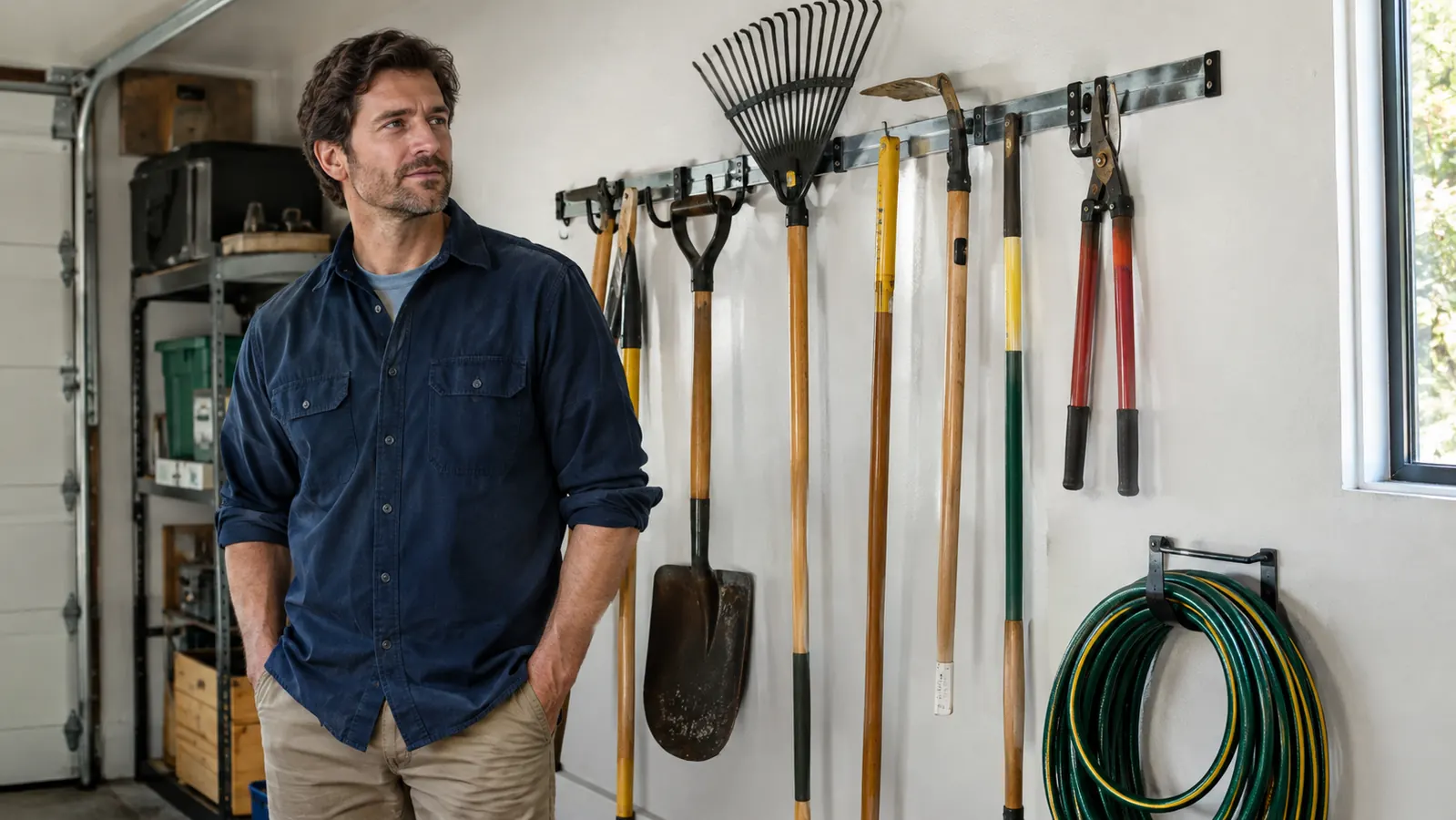
The mounting plate is what carries the weight, and it's beefier than I expected. I've hung a loaded rack with a combined weight of maybe 40 pounds of tools, and the screws haven't budged. I can't speak to the full 100-pound rating because I don't have that many tools. What I can tell you is that the rack doesn't pull away from the wall when you grab a tool that's stuck in the soil. That's the test that matters. I also moved the rack to the garage bay for a week in the fall to test it there, because that's where the snow shovel and ice scraper live in winter. It held those just as well, and I'll likely add a second rack before the snow flies.
The holders slide easily, which is good, but it also means you should set them once and leave them. I spent an afternoon arranging and rearranging, trying to get every handle to hang at the same height. That was wasted effort. The tools hang at slightly different heights depending on where the handle meets the grip, and it doesn't matter. What matters is that the handles don't touch the floor. Once I stopped fussing, I had the whole rack loaded in ten minutes.
How It Holds Up Over Time
The honest answer is: better than I expected. After six months in an unheated shed through a Nebraska summer, the rubber grips are still pliable. The frame hasn't sagged in the middle, which is where a cheaper rack would show it. The screws haven't loosened, and I didn't use thread locker. I did re-tighten the two top screws once, about a month in, after a week of hot weather. That was it. The shed hits 100 degrees on a hot July afternoon, and the wood expands and contracts with the humidity. I expected the screws to work loose. They didn't. I also checked the rubber grips in November, when the shed had been through a full season of temperature swings from the 90s down to the 30s. They're still soft and still hold a handle tight.
The finish has held up too. I've hung wet tools back on the rack more times than I'd like to admit, and the powder coat has kept the metal underneath protected. If you leave tools wet for days at a time, no rack will save the tools, and the finish will eventually show wear. But for normal use, this thing is built for the long haul. I checked the underside of the mounting plate in September, after a stretch of rain, and there was no rust starting at the edges.
The day that sold me on the rack was a Tuesday in late August. A storm blew through and knocked a big branch off the maple in the front yard. I grabbed the bow saw and the loppers off the rack, cleared the branch in about half an hour, and hung them back up wet. A week later, when I went to use the loppers again, the handles came out of the grips clean, no sticking, no rust on the metal. With the old pile on the floor, that same pair of loppers would have been buried under a tarp and a bag of mulch, and I'd have spent ten minutes digging for it.
Six months in, the TVKB rack hasn't sagged, loosened, or dropped a single tool. That's more than I can say for any plastic rack I've owned.
What I'd Change
The shelf is the weakest part. It's fine for light stuff, but I wouldn't put a heavy battery charger or a five-gallon bucket on it. The mounting brackets for the shelf are thin, and the shelf itself is just under two feet long. If you need real shelf capacity, buy a separate shelf unit. The rack is a tool holder first, and the shelf is a bonus. I keep it to a bag of twine, a box of plant tags, and a pair of gloves, and it does that job fine. If I were designing the rack, I'd make the shelf brackets a gauge thicker and leave it at that.
The other thing I'd note: the rack holds long-handled tools best. Short-handled tools like trowels and hand pruners don't sit well in the big holders. I hang my hand pruners from the smaller hooks at the bottom, and they work fine there. But if you're expecting one rack to organize every tool you own, you'll be disappointed. It's built for the long stuff, and it does that job well. My trowels still live in a bucket on the shelf, and that's fine. The smaller hooks at the bottom are handy for pruners and hand tools, but there are only a few of them, so don't plan on hanging a whole collection of small tools down there.
One more thing: the instructions are thin. The rack comes with a small diagram, but it doesn't tell you how to find a stud or what to do if your wall is drywall without studs where you want to hang it. I'm comfortable with that, but if you've never mounted anything, watch a video first. And measure twice. The rack is 68 inches wide, and you need that full width clear on the wall. I almost hung mine where a shelf would have blocked the last two holders. Good thing I measured first.
What I Liked
- Rubber grips hold fiberglass and wooden handles firmly, even in humid shed air
- Holders slide along the rails, so you can fit fat and skinny handles in any spacing
- All-metal frame and powder-coated finish showed no rust or sag after six months
- Mounts in about 20 minutes with the included hardware and six screws
- Cleared my shed floor of a dozen long-handled tools in one afternoon
Where It Falls Short
- Top shelf is light-duty; keep it under ten pounds
- Short-handled tools like trowels don't sit well in the big holders
- Instructions are thin and assume you know how to find a stud
- Open design keeps tools visible, so it won't hide clutter behind a door
Who This Is For
This rack is for anyone with a garage, shed, or basement wall who is tired of tripping over handles. If you have more than three long-handled tools and you keep them in a pile in the corner, the TVKB rack will fix that in an afternoon. It's especially good for people with fiberglass handles, because the rubber grips hold them better than bare metal hooks. And it's a solid choice if you rent, since the mounting holes are just six screws and easy to patch when you move. It's also a good fit if you want to see every tool at a glance before you head outside. I do, and that alone has saved me a dozen trips back to the shed. And if you're like me and you've already got the tools, the rack pays for itself the first time you don't have to buy a replacement rake because you stepped on the one you couldn't see.
Who Should Skip It
Skip it if you need serious shelf storage. The top shelf is light-duty, and the rack doesn't replace a shelving unit. Skip it if you have mostly short-handled tools, because the big holders are sized for rakes, shovels, and hoes. And if you want a rack that hides the tools behind a cabinet door, this isn't that. It's an open rack, and it looks like one. I like that, because I can see what I have at a glance. But if you want your shed to look like a catalog, you'll want something enclosed. One more group: if your wall is drywall with no studs where you want to hang it, you'll need anchors rated for the weight. The rack is heavy enough that I wouldn't trust a cheap plastic anchor.
The Rack That Got My Shed Floor Back
Six months of daily use and the TVKB rack still holds every tool I own, with nothing on the floor to trip over. Check today's price on Amazon and measure your wall space first.
Amazon Check Today's Price on Amazon →